
Quick Answer
The most useful CRM is not just a storage system. It is a prioritization system that keeps live work visible.
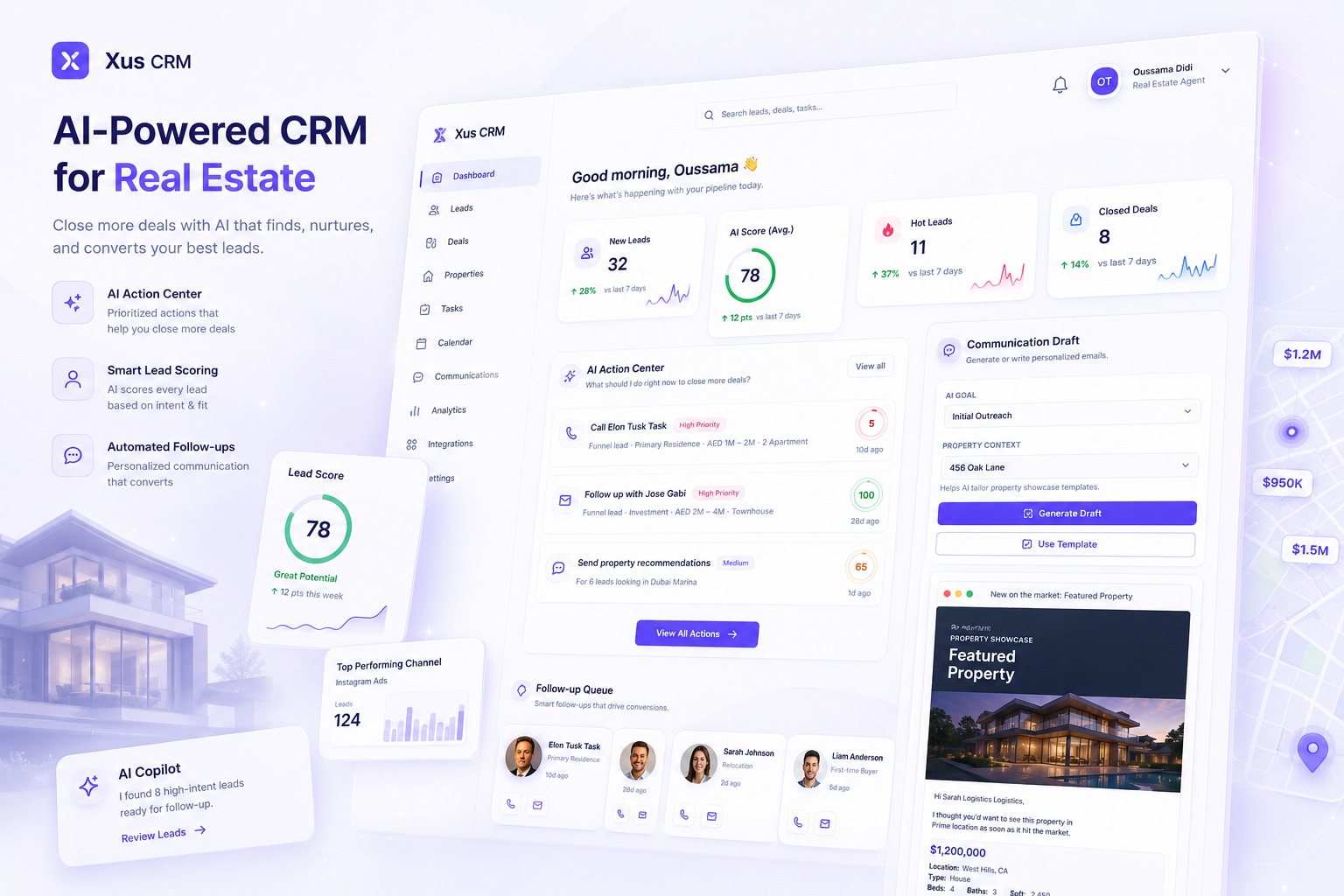
A CRM should tell you what to do next because most agents do not struggle with a shortage of information. They struggle with competing priorities. A next-best-action CRM turns timing, engagement, stage, and commitments into a ranked work queue so the next move is visible without opening five tabs or reconstructing context from memory.
What is a next-best-action CRM?
A next-best-action CRM is a system that does more than store contacts and notes. It helps the agent decide which conversation, follow-up, or task deserves attention now. The database still matters, but the operational value comes from what the system surfaces, not what it archives.
Why do most CRMs still feel passive?
Many CRMs were designed as record-keeping tools first. They are good at storing activity history, but weak at turning that history into a daily operating surface. When everything is visible at once and nothing is prioritized, the agent still has to invent the day manually.
What signals should shape the next action?
Timing and urgency
Some leads are near-term and need immediate attention. Others are important but not urgent. The system should separate those states clearly.
Recent engagement
Replies, repeat listing views, email clicks, form resubmissions, and showing requests all change priority.
Commitments and deadlines
Overdue tasks, promised callbacks, and time-sensitive opportunities should move upward automatically.
Ownership and handoff context
In team workflows, next-best-action logic breaks down if ownership is unclear. A strong CRM respects who owns the record and what changed recently.
How does this change daily workflow?
It removes decision drag. Instead of scanning a pipeline, inbox, and notebook separately, the agent opens one work surface, handles the highest-value item, and moves to the next. That tends to improve speed-to-lead, reduce dropped follow-up, and make task completion feel calmer.
What data does a next-best-action system need?
- Lead source and stage
- Recent communication history
- Timeline or urgency notes
- Scheduled tasks and due dates
- Ownership or assignment status
- Engagement signals from email, site, or funnel activity
What should agents look for when comparing CRMs?
Look beyond module lists. Ask whether the product helps close the loop between insight and action. Does it help you decide what to do now? Does it preserve context during the action itself? Does it keep continuity after the action is done?
Pipeline structure, lead scoring, and real workflow comparisons are all part of that answer.
Last updated: May 2026.
Ready to turn follow-up advice into daily action?
XusCRM gives agents lead scoring, Action Center prioritization, workflows, and funnel capture in one focused real estate workspace.
Start free